| Physical State |
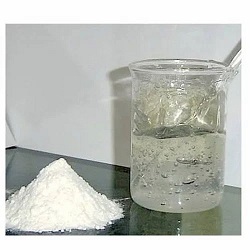
liquid
|
| Purity % |
99%
|
| Grade Standard |
Industrial Grade
|
| Packaging Details |
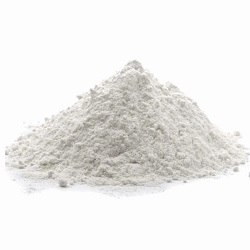
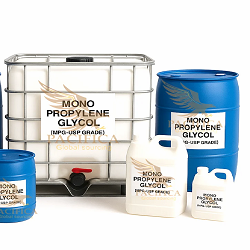
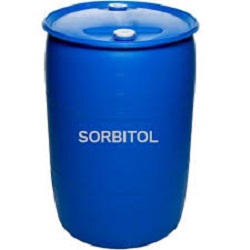
drum, bag for powder
|
| Usage/Application |
Laboratory
|
| CAS No |
50-70-4
|
| Synonyms |
D-Sorbitol
|
| Availability |
In Stock
|
Sorbitol (/ˈsɔː(r)bɪtɒl/), less commonly known as glucitol (/ˈɡluːsɪtɒl/), is a sugar alcohol with a sweet taste which the human body metabolizes slowly. It can be obtained by reduction of glucose, which changes the converted aldehyde group (−CHO) to a primary alcohol group (−CH2OH). Most sorbitol is made from potato starch, but it is also found in nature, for example in apples, pears, peaches, and prunes. It is converted to fructose by sorbitol-6-phosphate 2-dehydrogenase. Sorbitol is an isomer of mannitol, another sugar alcohol; the two differ only in the orientation of the hydroxyl group on carbon 2. While similar, the two sugar alcohols have very different sources in nature, melting points, and uses.